by: Sara Barnes
Last week I got to spend time with my son and his bunch of guy friends. They are all late thirties and work in tech companies. It was tremendously fun for me, seeing these boys grown up and managing their adult lives. They patiently taught me about the rugby game we were watching on the bar TV. I heard about their children, their spouses, their parents. It was energizing and enlightening.
One of the fellows was describing a dilemma at his work, and I made what seemed to me to be a logical suggestion. All five guys shook their heads in unison, rejecting my idea. After probing a bit, I realized my nonexistent experience with working in the tech world or in a profit-making organization had limited my perspective. Having spent my entire career in public service, government and nonprofit, I’m ill-informed about the challenges my son and his friends are facing handling IPOs, commissions, corporate-speak, markets. I made assumptions that our experiences were parallel, and they were not.
It was one of those moments when I managed to keep myself open to learning from others who were leading very different lives from my own. As I listened to more about what they contend with in their day-to-day work lives, I found I could begin to imagine their circumstances, and that by listening closely I could trade out my own history and replace it with more accurate details of my son’s friends’ lives.
Perspective-taking
In How to Encourage Perspective-Taking, Caryn Cridland recounts a story of a taxi driver who threw a brick through a car window. She traces the public condemnation against him at the outset, and then the reversal of opinion when the lifesaving aspect of rescuing a trapped passenger was revealed. Learning more details can help to broaden perspectives, and to learn, one has to be open to adjusting one’s original take.
Cridland writes, “When people are angry, they can sometimes forget to, or fail to, look at more than just the basic circumstances of the situation. They often just look at the behavior itself, and not what was behind it, not the intentions, nor what could have actually led to the other person’s behavior or caused the behavior in the first place.”
Cridland has a list of five ways to help folks to look at things beyond their own experience.
Telling stories about divergent experiences. “Stories can help shift people from unidirectional thinking.”
“Encouraging people to look at [a time] where they acted in a way that was out of character” to help others be sympathetic and understanding.
Making note of times when people with similar worldviews may choose very different routes to achieve their goals.
Reminding others that no one “wake(s) up in the morning intending to harm others.” alleviating the fear that the actions were intentional.
Drawing people’s attention to similar situations in their own lives so “they may be able to understand the emotions that are felt and expressed.”
Mediation can help
The structure of the mediation process encourages participants to consider others’ perspectives. “In these cases, it is the mediator’s role,” says Cridland, “to help people to see the situation from different viewpoints, even see the big picture, or more specifically, that other people’s actions, or inactions, can sometimes be the result of causes they have not considered or taken into account.”
In mediation we work to help disputants to experience mutuality with each other. If there is a standoff, folks might need to let down their guard, work to listen better, put aside their assumptions, slow down. Once both parties are actively trying to resolve their conflict, the idea is to help them to develop some level of mutuality. This is important and sometimes has a dramatic effect. When someone walks in another’s shoes, it can be profound.
The mediator asks, “Can you describe where we are, and tell it from the other person’s way of understanding?” When someone makes the attempt to shift their perspective, even the attempt can open up new ways of seeing the situation. If they successfully expand their viewfinder to include the other’s experiences, conflict resolution can be the result.
Asking the right questions
Cinnie Noble, who designed the CINERGY conflict coaching process, has put together a set of questions that help to broaden perspectives. Consider these as possible ways to invite someone to open up beyond their assumptions:
How would you describe what you and the other person disagreed upon in that situation?
How would the other person describe what you disagreed on?
What did the other person say or do that particularly provoked you?
What did you say or do that may have stood in the way of the other person being able to hear you and understand you?
What did you expect from the other person?
What do you think the other person may have expected from you?
What don’t you know about the other person’s perspective?
What doesn’t the other person know about your perspective on this situation?
I work with a number of couples, both those who are separating and ending the commitment and those who want to keep their relationship and strengthen their bonds. Often each partner comes with their own hardened perspective, informed usually by the worst moves the other has made, a snapshot of their partner at their lowest point. To create this perspective, the person has closed their viewfinder and attached themselves to themselves as a figure with a common character. People can present themselves as victim—the other as aggressor; as hero—the other as villain; as parental—the other as child; as caring—the other as heartless. This binary includes dehumanizing the other and rejection of their perspective, a shutting down of inclusive thinking.
To move folks away from the closed and accusatory position requires many mediators’ tools such as timing, patience, listening and asking questions. Once the story has been told, the mediator, with their neutral voice, might repeat what has been said to help each participant to be able to hear and absorb the other’s ideas. Asking each to restate what the other has said might happen later, after defenses have been softened a bit. It takes time. Normalizing the fact that all people have diverse perspectives on the same events can be a mediator teaching point, to help lower the temperature and help people to better understand the friction between opposing versions.
Unfamiliarity can drive judgment.
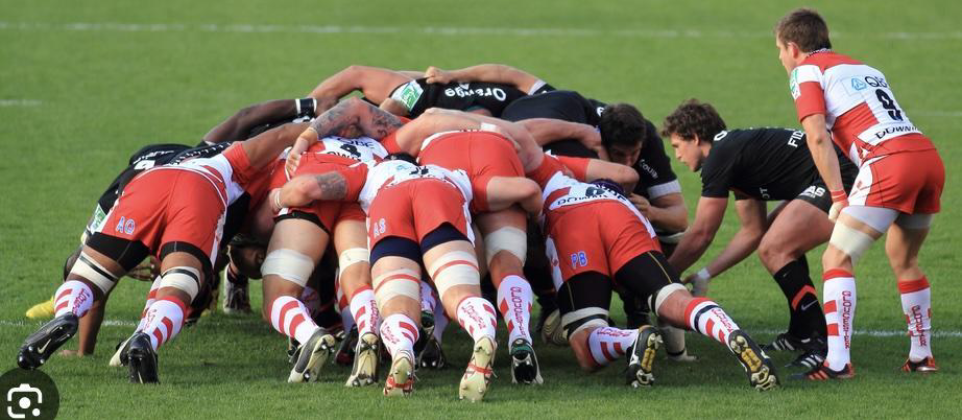
Before my bar experience with the guys, I knew next to nothing about rugby. The only snapshot I had in my mind was of thick-necked guys running around and piling on top of each other. And I remembered Nelson Mandela’s campaign to break down apartheid attitudes, included creating an integrated rugby team.
I appreciate my son’s friend Jon, who sat across the table, the roar of the crowd behind us cheering on their team and groaning when the opponent advanced. He kindly and without dismissiveness included me in his knowledge, answered my naïve (stupid) questions, figured out how to teach me the important features, while avoiding unnecessary detail.
I don’t know that I’m ever going to become a die-hard rugby fan. My perspective was, however, broadened to include the rugby concept, and I’ve started to undo my two-dimensional dismissiveness of it as an unworthy endeavor. I can appreciate rugby now because I know better how it works, what the motivations are and why there are rugby fans. I’ve expanded my perspective.