
Mediation Musings: Weaving Generations
By: Sara Barnes
With thanks to Samantha Hardy and Conflict Management Academy
“I finally realized college debt is a real problem. I had thought it was just entitled whining. Once my grandkid told me the details of their situation, I realized my assumptions were so wrong.”
—A grandfather born in 1940s, talking about grandchildren born in the 2000s
“When you explained to the staff that our elderly clients were from a generation where spelling, grammar and proofreading were markers of intelligence and being well educated, we realized we shouldn’t take it personally when they police our newsletter so harshly.”
—A nonprofit leader who works with the older adult population
“They had to save all these paper photos. As I was going through my grandmother’s things, I realized how precious the albums were. For their time, it was the only way to keep a visual memory, in its physical form. Now I sort of get it why she doesn’t want us to throw anything away, I used to think she was a hoarder.”
—A Gen Z, about his grandmother’s belongings
Listening
The misunderstandings, assumptions and judgments between generations cause some real conflicts. It is natural for people to believe the way they were raised, the time they grew up and the standards they considered as the norm are superior to other generations’ ways of being. Just like my grandmother and her hand-cranked dryer, it is hard to adopt to new ways.
We, as a species, have evolved with a negativity bias toward new ideas. It is hard to turn off our condemnation of each other and really pay attention with an open mind. As you read in the above quotes, lifted recently from my own life, being open and noticing other generations’ realities can pay a dividend of understanding, appreciation and expansive awareness.
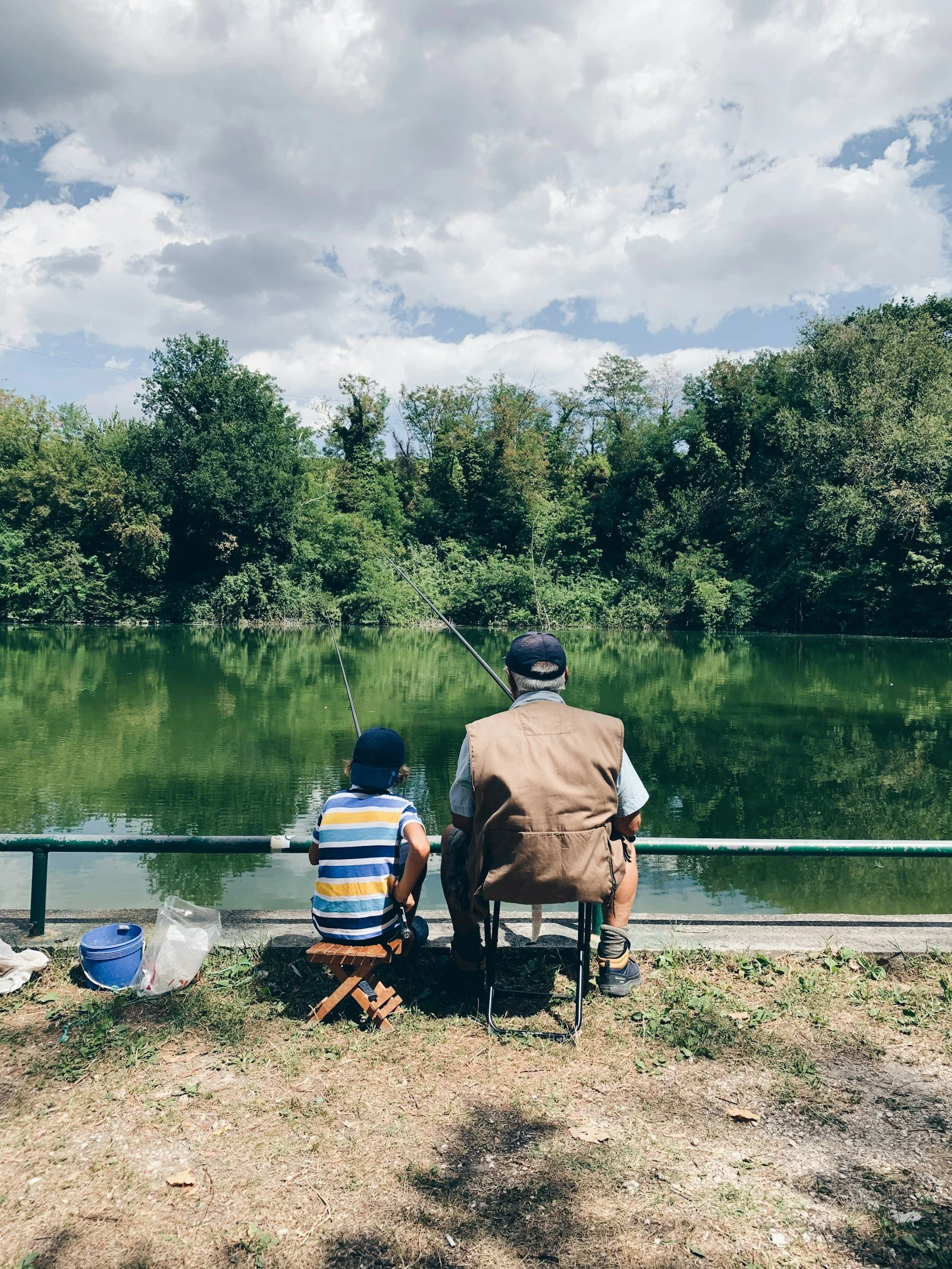
The generations do weave themselves together, even if we tend to cluster around others with a similar age and stage. From babies to elders we gather, at weddings, funerals or vacations. We see each other up close. As we observe other generations socializing, eating, dancing, laughing, we take in a bit about what it might be like to live another life, from another time, with other generational influences.
At my work, I have colleagues who are pushing 90 and those who are just beginning adulthood. Each might talk a little differently, pay attention to divergent events and/or react with a lens that is shaped by varied world events. We also teach each other things, as we thread our fiber over and under along the weft while our companions, much older or younger, create the warp of the community fabric.
Generations
Today, we find a unique phenomenon, with five generations who are fully participatory in modern adult life. This is the first time in history such a grand span of ages and birth years are coexisting in society in significant numbers. I’m a baby boomer and my son is a Millennial, and I work with Traditional/Silent, Gen X, and Gen Z folks. Since we have all grown up in different times with divergent core experiences, it requires commitment and flexibility to function productively and negotiate roles and expectations. Charts such as the following can help to show the wide-ranging approaches to core attitudes, broadly defined by each generation.
As Samantha Hardy of the Conflict Management Academy comments, “Generations are a little like horoscopes . . . [it] doesn’t mean you’re all exactly the same . . . [but] you have grown up with similar influences in your life. Everybody will have individual responses to those sociocultural influences; we don’t want to stereotype people based on their generation. . .. There are usually some commonalities just from similar life experiences through things like technology and big events that happen during your lifetime.” Hardy’s comments are based partly on the work of Jean Twenge, described in Twenge’s recently published book, Generations: The Real Differences between Gen Z, Millennials, Gen X, Boomers and Silents—and What They Mean for America’s Future.
We conflict resolution professionals are tasked with examining bias and stereotypes as contributory to conflict. Where there is prejudice, where there is unchallenged othering, where bias and discrimination are allowed to thrive, there you will find conflict. As I tell students in the various courses I teach, we are the small group of people who go looking for conflict. When we find conflict, we have some skills and talents to apply in order to provide support and to help to resolve these disputes.