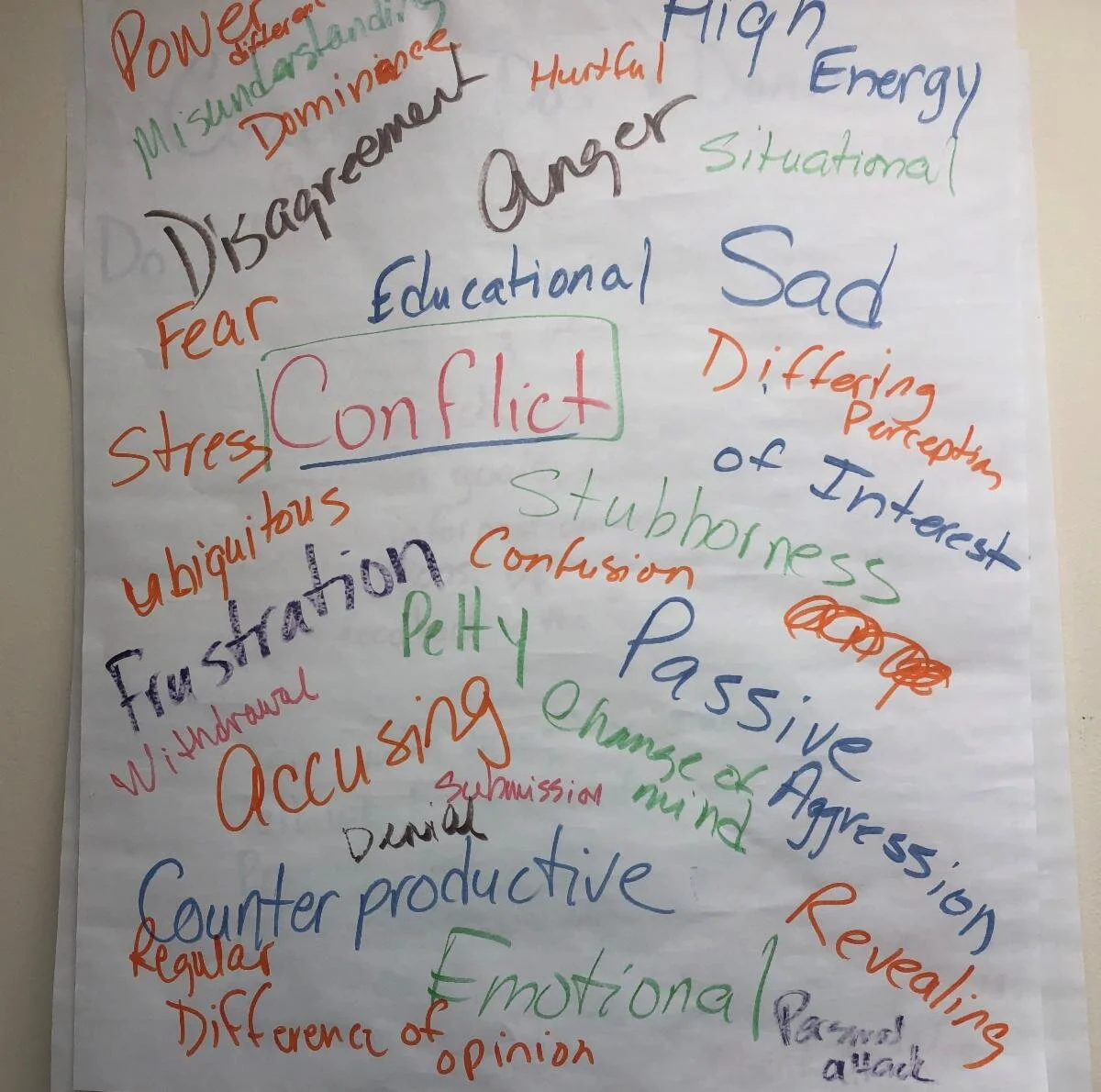



WHILE WE ARE KEEPING SOCIAL DISTANCE AND HAVE A LOT OF TIME ON OUR HANDS, LET’S DO SOME CONFLICT RESOLUTION…
Learn To Listen Better

Want respect?
Listen better.
Think of people you admire. A leader, an expert, a mentor, someone you can rely on. What do these people all have in common? They are good at the skill, art, craft, and science of listening.
The skill of listening
Just like any skill, it takes practice, practice, practice. Try a self-improvement listening project - build your listening muscles. Face another person. Turn off your other thoughts. Postpone conclusions and judgements. Open up your mind to the other person and work hard at listening. Want to check how you are doing? Paraphrase or repeat back to the person. Say, "I'd like to see if I've got it. Is this what you just said?" Say back what you think you heard and see if the person recognizes their message.
The art of listening
Use your creative self while you work to be a great listener. Make pictures in your mind of what the person is saying. Not your own story, their story. Zone in on body language and tone--do you see or hear something that provides more information beyond the words?
Keep track of your own body language. Stay calm and open to what is being said. Find your own creative system to stay on track with what the other person is saying and what the meaning is behind the words.
The craft of listening
There are rules and structures that work if you want to be a good listener. Find a good place for a talk, don't try to multi task--you can't, no one can. Make encouraging moves or sounds, to show you are there with the speaker and that you are interested and listening.
With difficult topics, ask if you can summarize or paraphrase what is said. Don't let your answer, conclusion or personal experience emerge to hijack the conversation. Listening is not about you, it is about the other person. In your mind, think about these questions: What are they saying? What are they not saying? What are you learning about the person? Why are they telling you this? What do they seek from you as the listener?
Then ask questions--good solid real questions. First clarify information. Find out facts or check on details that are important to understand. Then ask deeper questions that are more open ended. Don't tell your own story. Don't provide your judgement. Don't tell the person what to do. Don't diminish the person or their values. Lift them up with the gift of your attentive listening.
The science of listening
Two people, sitting together and talking is a balm for life's wounds. We are social beings. We need to know someone appreciates our own ideas and experiences. Listening equals empathy. Blood pressure improves. Adrenaline and stress response returns to neutral. Muscles relax. Breathing calms. A warm feeling of calm develops. Trust builds. Respect increases. It's pretty amazing the actual physical and psychological effects that being listened to can have.
Here's the surprising part. The listener receives all the above positive effects along with the listened to person. We mirror each other's status when we spend time together. When you open your mind to listen to another person, it benefits you too. And if you have to be on a video call or phone to talk, use your voice to promote togetherness and calmness.
Conflict resolution and listening
Professional mediators, conflict coaches and others in the conflict resolution world know that their first and most important tool in the tool box is listening. This is how we do our work, looking underneath the words for the most important information--the needs, interests, values and identity of the speaker. If we are good at listening, there's no room for our own agenda or personal biases. We open our minds and do our very best listening in order to find potent foundation upon which to resolve conflict.
Do this: Ask someone in your life to help you to become a better listener. Ask the person to notice if you are listening well or not. Try to paraphrase - repeat back - what someone says.
How did you do? Are you picking up what the other person is saying or substituting your own ideas and vocabulary? Stick with it and be easy on yourself. Practice makes a little better -- there is no perfect. We are all in training.
Listen for figurative language to understand better what the person is saying. Do they use more sports, gardening, travel, boating vocabulary?
Watch their body language, what do you see?
Work on your follow up questions, removing your own judgement and conclusions--really ask to hear the other person's thoughts and ideas.
Don't let yourself believe you are multi tasking--especially when someone is trying to talk with you about something important. Give them your full attention. Put the phone down.
Watch a video about the craft and science of listening here--watch till the end for the RASA approach: Listening Ted Talk.
Or read an article Listening to loved ones or Listening at work