



Housing Mediation Services. Mediação em Casos de Moradia.
We Can Work It Out!
Mediator Musings: Conflict Resolution Essentials
Sara Barnes, Executive Director
Polarization. Unbridgeable divide. Entrenched separation. Hardened attitudes.
We are living in difficult times. In the world of conflict resolution there's a lot of work to be done.
Are you in this situation? Is there a friend, family member, co-worker or community member with whom you have a seemingly unresolvable break in your connection? Are you having trouble building bridges back to understanding? Here's a few ideas of how to proceed:
Tell the other person you want to try to fix things. See if the other person is willing. If they don't want to repair the connection, you'll have to wait until you have a willing partner.
Listen to understand what is happening for the other person, and how they see the conflict from their point of view. Listen without your rebuttal ready. Listen with an open mind to understand the other person's identity and values.
Reflect back what you think you heard and check to see if you have understood what the other person has shared. Be willing to amend your understanding.
Ask if the other person would like to know how you see things. Wait to hear that they are interested and receptive before you provide them with your ideas.
Speak honestly and speak for yourself.
Offer a sincere response to this interchange. You might say, "We see things quite differently. I'm really glad that we are talking. I want to keep up our connection"
Refrain from making assumptions, diagnosing, judging or condemning. Take some time to consider what you have learned about the other person.
Decide what you want to do next, knowing you cannot change anyone but yourself.
Seek support from your circle of care to handle your feelings and frustrations.
Try to keep the door open as long as you can without burning bridges.
Give yourself a pat on the back for being a brave and caring person who works to undo a conflict and to preserve a human connection.
Here's a really remarkable and optimistic list of organizations and programs working to support these kinds of conversations. Click on any of the over three hundred links to see the breadth of work on conflict resolution, bridging divides and mutual understanding. There's good news here. Help to bridge the divide
If you need help talking things out, mediation, conflict coaching, facilitation and discussion support services can help. We can help you to work things out. MV Mediation is here to serve our community. More here

We Can Work It Out!
MVMP Sponsors a Hole at Big Brothers Big Sisters Golf Outing

MV Mediation Program (MVMP) Board member, Kenneth Andrichik, with the Sponsorship sign at the September 27th Big Brothers Big Sisters Golf Outing.
Big Brothers Big Sisters matches Island youth with adult mentors to help ignite their potential. The MVMP “hole” sponsorship helped raise awareness that MVMP has been helping our community, including youth and families, to resolve disputes since 1984!
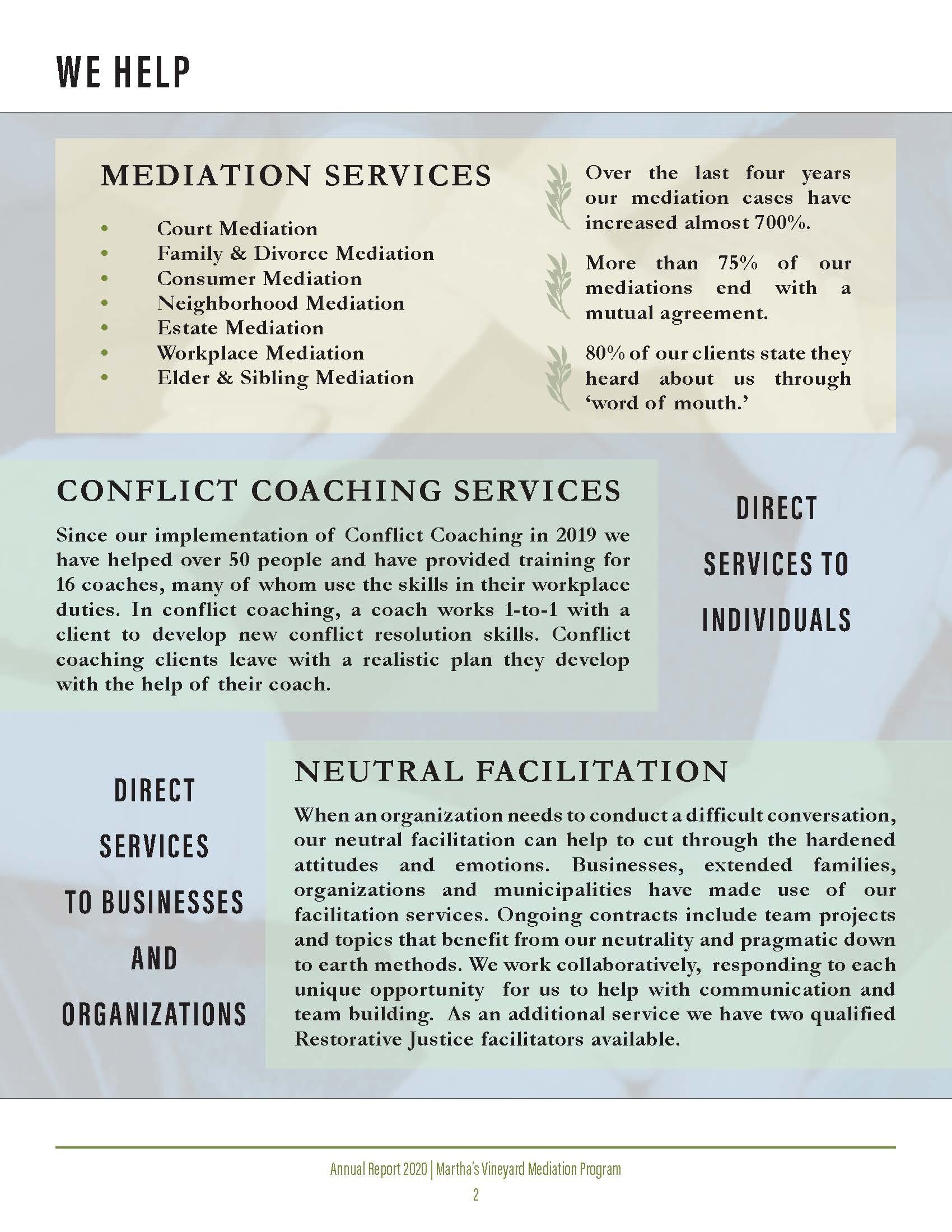
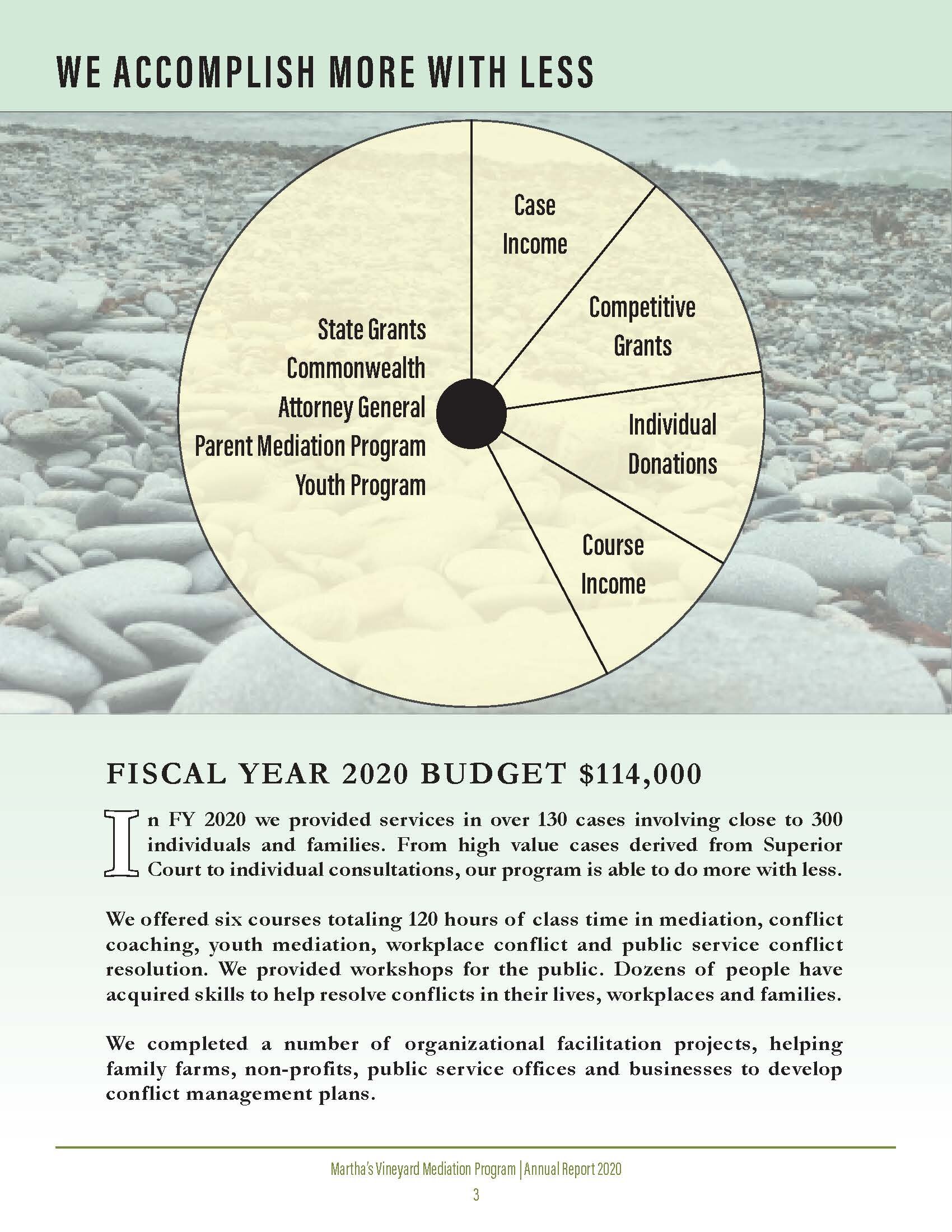
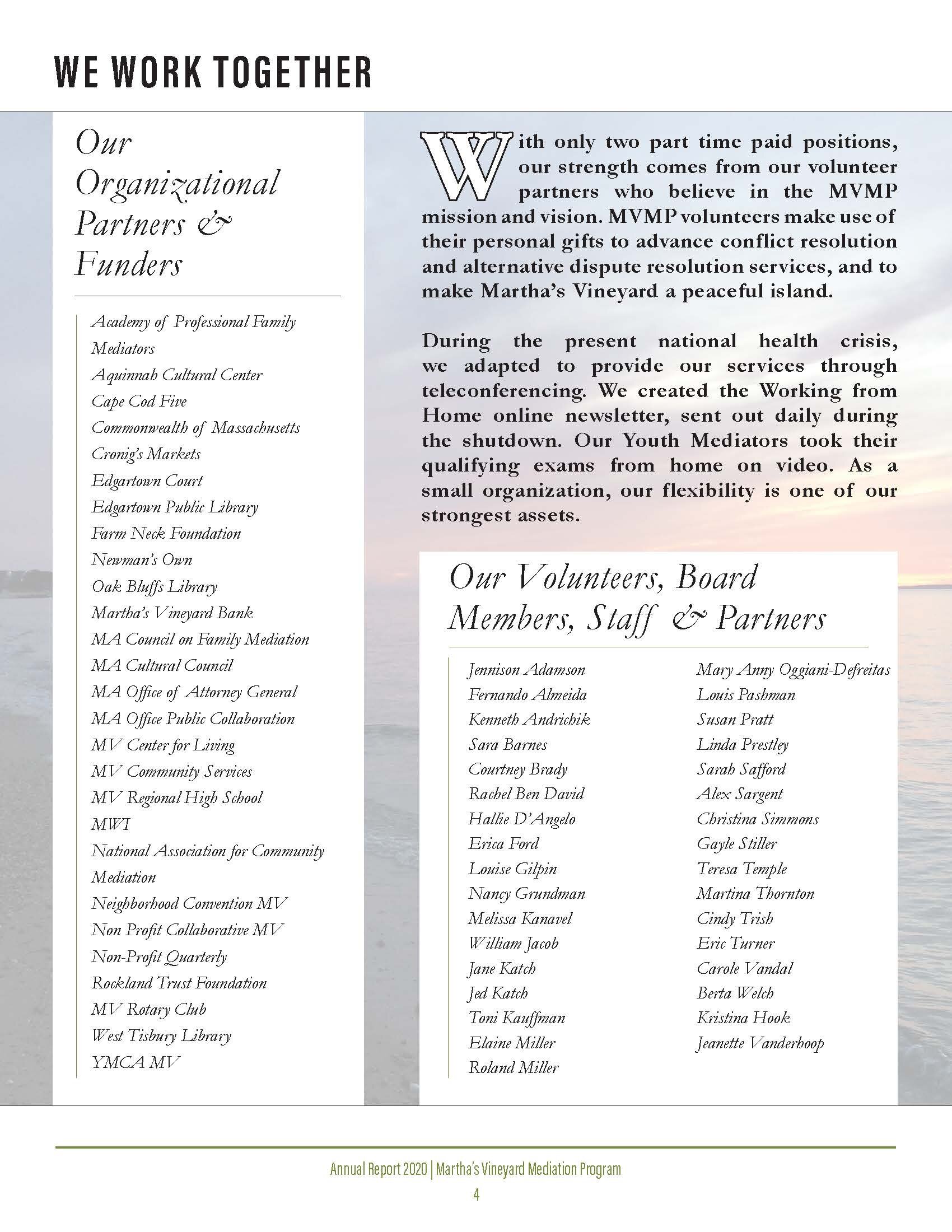
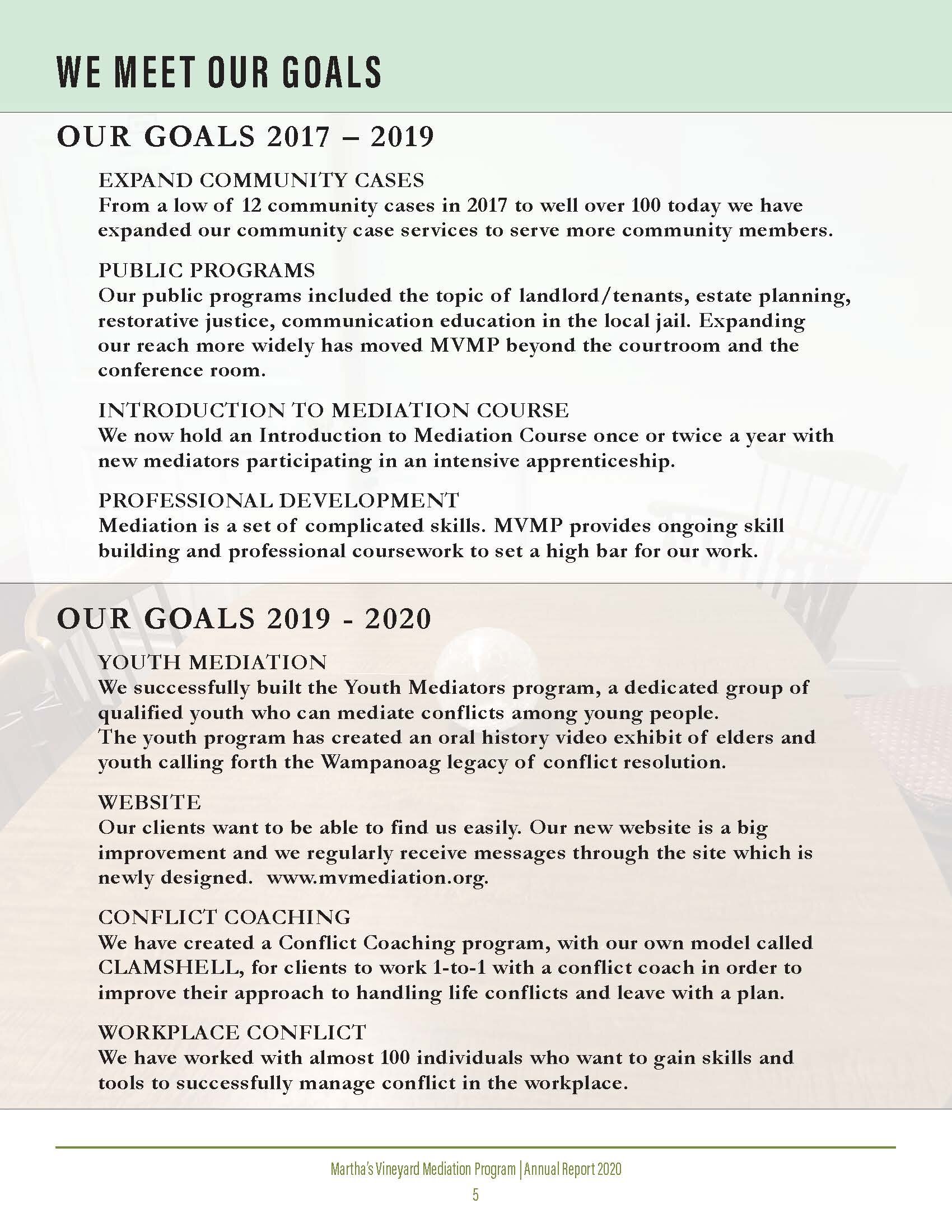
2020 MV Mediation Program Annual Report
Collective Action & Conflict Resolution
WHILE WE ARE KEEPING SOCIAL DISTANCE AND HAVE A LOT OF TIME ON OUR HANDS, LET’S DO SOME CONFLICT RESOLUTION…

COLLECTIVE ACTION & CONFLICT RESOLUTION
How is Collective Action Related to Conflict Resolution?
"What do you do when the conflict you have is not with an individual? When you are in conflict with a policy, a law, something unfair in society?" This was the question asked in a class for conflict resolvers recently.
In general, the skills and strategies in conflict resolution are oriented toward individuals or small groups. In the mediation process, even multi party mediations, it is rare to have more than a handful of people involved. Most mediations are between two people. Conflict resolvers might facilitate difficult conversations among a group, helping to create a positive environment for all voices to be heard and respected.
There are intersections and overlapping concepts that connect political, social and cultural movements with the concepts of conflict resolution. Below is an adapted chart showing the range of approaches that can be taken when one wants to effect large scale change. Mediators fit in there, probably more toward the individualistic and persuasive quandrant of the chart. Those involved in alternative dispute resolution, such as mediation, work to make change and have an impact on the world one conflict at a time.
Working with others
We are going through a time where we can witness the impact and achievements of collective action. When one person joins with others the multiplied strength can make a big difference. Similar to analyzing individual conflicts, some of the same aspects can be found in collective social movements.
Groups make demands--in conflict resolution we call these positions. Underneath these demands are interests. People join together because their interests match up. For the student who asked, what to do when you want to change things, the answer might be to find a group that matches your interests. See interests
Another parallel connecting conflict resolution concepts with social movement groups is the necessity for negotiation. When coming to collective agreement on the direction of the group, participants find themselves involved in many of these discussions. What is most important? Which actions should we take? How should we articulate our beliefs? Who is best to represent us?
And when a group is able to achieve the desired change, negotiating a durable agreement overlaps with the work done in mediation and other conflict resolution processes.
Values and Identity
As we learn in conflict analysis, conflicts are related to values and identities. We are often moved to act when something negatively impacts how we see ourselves in the world -- our identity--and the standards we set for how we live our lives - our values. See values see Identity. Often individuals choose to work with a group that aligns with their values and/or identity and in this way can be comfortable that the work of the group represents them well.
Conflict Styles Matrix
In conflict resolution we are familiar with the conflict styles matrix. We might apply this chart to the work of social movements and groups. When to accommodate? When to be more assertive or avoidant? As part of a group that is seeking change, we might look along the diagonal-to compromise and collaborative/ creative problem solving to set a goal for how to move forward.
Do this:
Short interview about mediators involved in social movements video
Consider the chart above that shows the relationship between individual and collective actions. Where do you fit? What topics would motivate you to join with others to affect change? What policies, laws or cultural norms do you feel conflict with your values and/or identity?