The missing element of re-entry services for incarcerated people in MA is the pro-social element. The Re-entry Mediation Program (ReMAp) focuses on this element, provided by a network of community mediation centers under a program administered by the MA Office of Public Collaboration at the McCormack Graduate School.
Parent Mediation: Divorce, Family & Conflict Resolution
Collective Action & Conflict Resolution
WHILE WE ARE KEEPING SOCIAL DISTANCE AND HAVE A LOT OF TIME ON OUR HANDS, LET’S DO SOME CONFLICT RESOLUTION…
COLLECTIVE ACTION & CONFLICT RESOLUTION
How is Collective Action Related to Conflict Resolution?
"What do you do when the conflict you have is not with an individual? When you are in conflict with a policy, a law, something unfair in society?" This was the question asked in a class for conflict resolvers recently.
In general, the skills and strategies in conflict resolution are oriented toward individuals or small groups. In the mediation process, even multi party mediations, it is rare to have more than a handful of people involved. Most mediations are between two people. Conflict resolvers might facilitate difficult conversations among a group, helping to create a positive environment for all voices to be heard and respected.
There are intersections and overlapping concepts that connect political, social and cultural movements with the concepts of conflict resolution. Below is an adapted chart showing the range of approaches that can be taken when one wants to effect large scale change. Mediators fit in there, probably more toward the individualistic and persuasive quandrant of the chart. Those involved in alternative dispute resolution, such as mediation, work to make change and have an impact on the world one conflict at a time.
Working with others
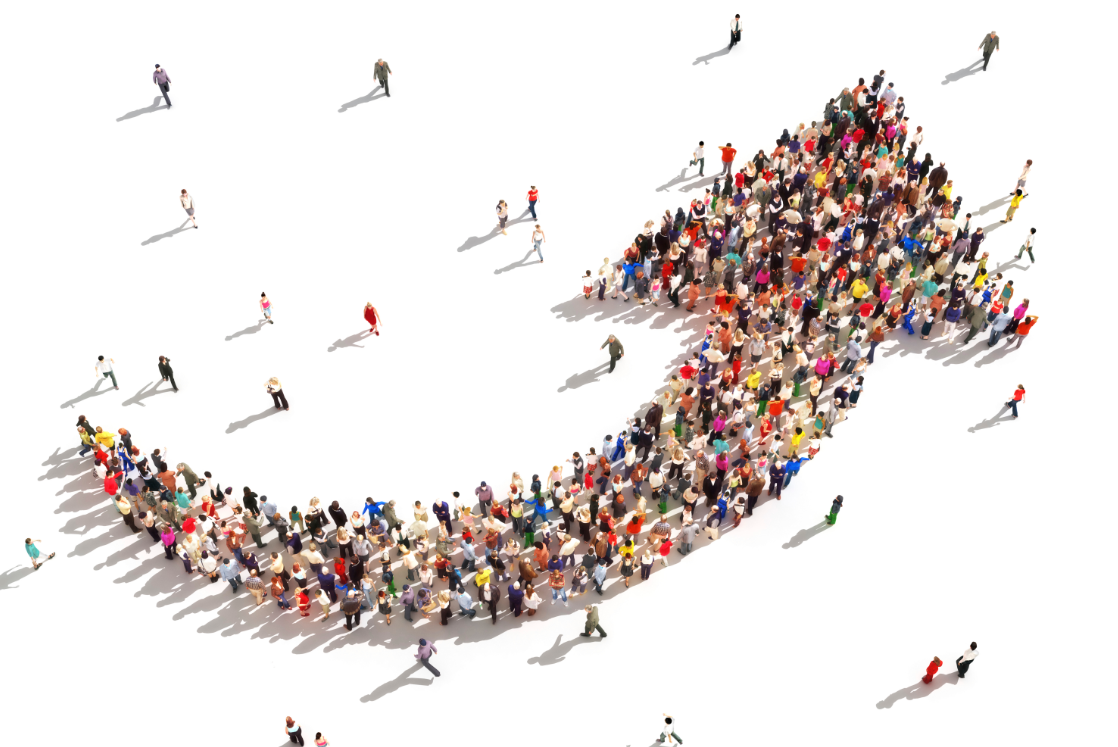
We are going through a time where we can witness the impact and achievements of collective action. When one person joins with others the multiplied strength can make a big difference. Similar to analyzing individual conflicts, some of the same aspects can be found in collective social movements.
Groups make demands--in conflict resolution we call these positions. Underneath these demands are interests. People join together because their interests match up. For the student who asked, what to do when you want to change things, the answer might be to find a group that matches your interests. See interests
Another parallel connecting conflict resolution concepts with social movement groups is the necessity for negotiation. When coming to collective agreement on the direction of the group, participants find themselves involved in many of these discussions. What is most important? Which actions should we take? How should we articulate our beliefs? Who is best to represent us?
And when a group is able to achieve the desired change, negotiating a durable agreement overlaps with the work done in mediation and other conflict resolution processes.
Values and Identity
As we learn in conflict analysis, conflicts are related to values and identities. We are often moved to act when something negatively impacts how we see ourselves in the world -- our identity--and the standards we set for how we live our lives - our values. See values see Identity. Often individuals choose to work with a group that aligns with their values and/or identity and in this way can be comfortable that the work of the group represents them well.
Conflict Styles Matrix
In conflict resolution we are familiar with the conflict styles matrix. We might apply this chart to the work of social movements and groups. When to accommodate? When to be more assertive or avoidant? As part of a group that is seeking change, we might look along the diagonal-to compromise and collaborative/ creative problem solving to set a goal for how to move forward.
Do this:
Short interview about mediators involved in social movements video
Consider the chart above that shows the relationship between individual and collective actions. Where do you fit? What topics would motivate you to join with others to affect change? What policies, laws or cultural norms do you feel conflict with your values and/or identity?
Celebrate the Graduates
WHILE WE ARE KEEPING SOCIAL DISTANCE AND HAVE A LOT OF TIME ON OUR HANDS, LET’S DO SOME CONFLICT RESOLUTION…
CELEBRATE THE GRADUATES
You can learn to help others resolve conflicts
In this midst of the graduation season, however transformed in the current situation, there are some graduates you may not have heard about. This week three groups of conflict resolution students finished their coursework.
The Conflict Resolvers
This group met once a week for the last three months to develop conflict resolution skills and tools. Most of these participants are involved in public service. They met by video conference in a supportive group who took on many difficult concerns. Here are some of the topics in the course:
Defining conflict
Conflict metaphors
Conflict styles
Analyzing conflicts
Effect of conflict on our stress levels
Becoming better listeners
Using neutral language
De-escalation techniques
Congratulations to the graduates of the Conflict Resolver course. You will make a difference!
The Youth Mediators
Their classmates are performing their musical concerts by video conference and missing the prom. These ten MVRHS students have managed a unique milestone. They have attended 15 or more hours of training as youth mediators. Sitting on their beds with their pets in their laps and handling uncooperative internet, our newest and youngest mediators worked hard to become ready and willing to help other young people to resolve their conflicts. In their classes they learned about:
Mediation principles: Confidentiality, Neutrality, Voluntariness, Self-Determination.
The structure of mediation: Introduction, Hearing conflict story, Encouraging negotiation, Finalizing agreement.
Asking open-ended questions
Being professional
Using patience
Being self-reflective
They are remarkable young people, with poise and commitment. Their work is ahead of them. They are ready to help. We should all be proud.
The Conflict Coaches
These mediators participated in the initial training in the practice of conflict coaching. Even though they are all experienced mediators, they seek to learn how to work 1:1 with clients who want to improve their approach to conflict. Working as a coach is different than leading the process of mediation. The course looked at the following concepts:
What is coaching?
Listening like a coach.
Using feedback.
Probing for needs, values, identity.
Analyzing internal and external conflict
Surveying mutuality.
Using the pro/con tool for planning.
Now those who are going forward toward full qualification will endeavor through an apprenticeship, participating in a number of practice coaching cases, with ongoing supervision and feedback.
Good news
Its a difficult time, the curent events and our lives are challenging. Yet, there is good news. These fine people took their time, their brains and their commitment and worked to learn new skills to help other people. Its heartening to know there are folks among us who are looking to make things better.
If you are interested in learning skills in the conflict resolution area, reach out to our organization or to your local community mediation group. Mediators, Conflict Coaches and Conflict Resolvers are not born--they are developed through learning and dedication.
Congratulations to all the graduates!
Learn more:
What is conflict coaching? Article
What is youth mediation? Article
Conflict resolution in public service. Article
Finding my local community mediation program. In Massachusetts. In the US
You Can Apologize Better
WHILE WE ARE KEEPING SOCIAL DISTANCE AND HAVE A LOT OF TIME ON OUR HANDS, LET’S DO SOME CONFLICT RESOLUTION…
YOU CAN APOLOGIZE BETTER
The apology
It’s hard to apologize. OK that's the end of the column. Thanks for reading.
Well there is more to say about apologies and their use value in handling conflicts. But, let's just hover here for a minute. It is really hard to apologize well, to gather your thoughts, become humble, show genuine remorse and to communicate your 'I'm sorry' effectively.
Why are apologies so hard? My conflict resolution teacher Tammy Lenski writes about her struggles to apologize, and notes that fear is a factor.
As I contemplate the apology, I notice that fear colors what I’m anticipating may happen. All the images in my head cluster around fear: She will lash out. Others will hear. She will not accept the apology. She will write me off. She will be holier than thou. She will insult me as someone who cannot walk my own talk consistently. I will feel shame.
Apologies are asked for in mediation fairly often. Sometimes it’s exactly what is needed, and the person who apologizes does it with care and sincerity. Other times, though, the request for apology becomes a battle ground. As a mediator it is possible to help people to find a kind of side door to an apology. The person may not actually apologize, but the purpose is served in other ways. The mediator asks some well-crafted questions. Some might be:
Talk a little bit about what you want them to understand — the reasons behind your wish for an apology.
Why is an apology important to you?
What would an apology from them signal to you?
Can you talk about the impact of their words/actions on you?
These questions get to the interests underneath the request for an apology. If you missed the column on interests in conflict resolution you can read it here. Even if the apology is not forthcoming, the underlying concerns can be unearthed. Hopefully this leads to better communication between both parties, even if an actual apology might not be forthcoming.
Bad apologies
We have all experienced bad apologies, and maybe been the recipient or the creator of some bad ones ourselves. There are so many examples of bad apologies, this aspect of the topic almost goes without saying. Research shows the following are the top four ineffective apology approaches.
Failing to take meaningful responsibility.
Focusing on their own good intentions instead of the impact of their words or actions.
Using "if" or "but," as in "I’m sorry if you were offended" and "I'm sorry, but you took it the wrong way."
Sounding rote or mechanical, or coming across as uncaring or disingenuous.
How to apologize better
Recent research looked into possible components of apologies. Two stood out as more effective. If you are trying to craft an apology make sure to include both of these, if you want to make a difference in the situation.
Acknowledge your responsibility. This demonstrates willingness to “own” the impact of your words and/or actions.
Offer to repair the damage that was done. This helps restore tangible and/or intangible effects resulting from the deed.
Of course these two ingredients of an effective apology could be in place, and yet the apology may fall flat. That's because the apologizing person must use sincere and earnest body language, a positive vocal tone and a conducive setting. Mediators and conflict coaches can help clients to prepare for an apology by rehearsing all these components.
Core Values
Conflicts are related to values. People have conflicts when their values are challenged or when something happens that goes against their values. Apologies are related to core values as well. A research study looked into this and found that, "When people focus on their core values, they seem to become more willing to sincerely apologize" Karina Schumann from the University of Pittsburgh and her colleagues asked participants to write about the personal value they rank highest and in referencing these values, the individuals showed more willingness to apologize with sincerity to the other person. Mediators, conflict coaches and associates of those involved in conflicts might reference core values as a way to help the apologizing person put things in perspective.
Do this: